 14-Mar-2026
 5 mins read
Landing a Data Engineer role at Netflix is considered one of the most challenging interviews in the data industry. Netflix operates at massive scale processing trillions of events every month from millions of users worldwide. Because of this, the interview process focuses not only on coding skills but also on distributed systems knowledge, large-scale data architecture, and strong problem-solving ability.
Below is a structured breakdown of the typical Netflix Data Engineer interview process, common questions, and preparation insights.
About Netflix and the Role
Netflix started as a DVD rental service and evolved into the world’s largest streaming platform, serving over 260 million users across more than 190 countries. Behind every play, pause, recommendation, and search lies a massive data infrastructure that processes enormous volumes of events in real time.
Data engineers at Netflix build the pipelines and platforms that power recommendations, experimentation, analytics, and product decisions. Their work directly impacts how users discover and consume content.
Tech Stack and Data Infrastructure
Netflix’s data ecosystem is built to process extremely large datasets efficiently. Some of the most important technologies used include Apache Spark for large-scale data processing, Kafka for streaming event pipelines, and Flink for real-time analytics.
Their storage layer relies heavily on Amazon S3 as a data lake, along with distributed systems like Cassandra, Redis, and Elasticsearch. For analytical querying, Netflix commonly uses engines such as Presto and Trino.
Workflow orchestration is handled using Airflow, while container orchestration and infrastructure management rely on Docker, Kubernetes, Jenkins, and Spinnaker. Monitoring systems like Grafana and Prometheus help maintain observability across their large infrastructure.
Programming languages commonly used include Python, Java, Scala, and SQL.
Interview Process Overview
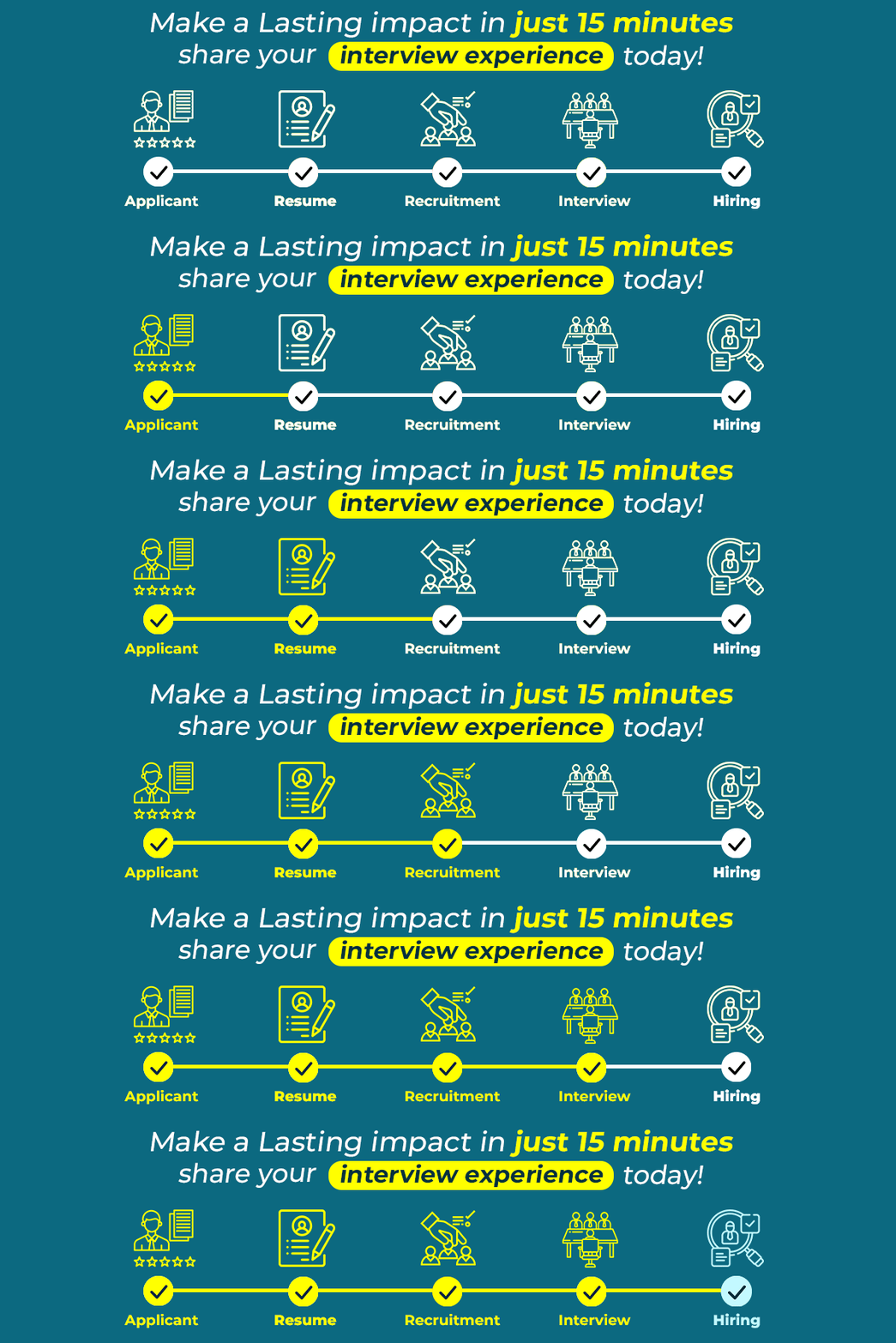
The Netflix Data Engineer interview process typically takes around three to four weeks and consists of several stages.
The first step is an application review where recruiters and hiring managers evaluate resumes to identify candidates with strong distributed systems experience, Spark or Kafka knowledge, and experience building scalable data pipelines.
The next stage is a recruiter phone screen lasting around thirty minutes. This conversation focuses on understanding your experience, discussing your interest in Netflix, and evaluating whether your background aligns with the role.
If successful, candidates move on to a technical phone interview lasting approximately seventy-five minutes. This round usually includes coding exercises, SQL questions, and discussions about distributed systems concepts.
The final stage is a virtual onsite interview loop lasting around four to five hours. It includes multiple interviews such as coding, system design, technical deep dives, and behavioral discussions.
After the onsite loop, the hiring panel reviews the feedback and makes a final decision. Offers are usually communicated within about a week.
Technical Interview Questions
Netflix places strong emphasis on coding fundamentals and data processing logic.
One common SQL interview question involves retrieving the second highest salary from a dataset.
Example question:
➤ Write a SQL query to return the second highest salary from the engineering department.
A typical solution uses window functions such as DENSE_RANK() to rank salaries in descending order and filter for the second rank.
Another question focuses on analyzing viewing behavior.
Example question:
➤ Identify the top ten users with the highest number of viewing hours during the previous month.
This type of question tests the candidate’s ability to write aggregation queries, use joins, and apply window functions to analyze large datasets.
Python or algorithmic questions are also common.
Example question:
➤ Given a list of numbers from 0 to n with one number missing, write a function to identify the missing value.
A typical solution calculates the expected sum of the range and subtracts the actual sum of the numbers provided.
Candidates may also be asked to implement simple data-processing logic using Python or Scala.
System Design Questions
System design interviews are a major component of the Netflix hiring process. Interviewers expect candidates to design scalable systems capable of processing petabytes of data.
A common question might be:
➤ Design a recommendation system for a streaming platform similar to Netflix.
Candidates are expected to outline a high-level architecture involving event ingestion, real-time processing, feature storage, machine learning pipelines, and API services delivering recommendations.
Typical components discussed include Kafka for streaming user interaction events, Spark or Flink for real-time processing, feature stores for machine learning models, and caching layers for fast API responses.
Interviewers also expect candidates to address topics such as scalability, latency, fault tolerance, data consistency, and cost optimization.
Behavioral and Culture Fit Questions
Netflix places significant emphasis on cultural alignment. Their well-known “Freedom and Responsibility” culture expects engineers to take ownership and make independent decisions.
Behavioral interviews typically explore how candidates handle real-world engineering challenges.
Example questions include:
➤ Describe a time when a production data pipeline failed and how you handled it.
➤ Tell me about a situation where you disagreed with a team’s technical decision.
➤ Explain how you make complex data accessible to non-technical stakeholders.
➤ Describe a project where requirements were unclear and how you managed the ambiguity.
Interviewers expect answers using the STAR framework explaining the situation, the task, the actions taken, and the final results.
Preparation Strategy
Preparing for a Netflix data engineering interview typically requires several weeks of focused preparation.
Candidates should begin by strengthening data structures and algorithms knowledge, practicing problems involving arrays, strings, graphs, and trees. Platforms like LeetCode are often used for this preparation.
The next step is mastering SQL. Candidates should be comfortable with complex joins, window functions, query optimization, and designing database schemas for large datasets.
Distributed systems knowledge is also essential. Engineers should understand technologies like Kafka, Spark, and Flink, as well as concepts such as partitioning, consistency models, and fault tolerance.
System design practice is particularly important. Candidates should be able to design large-scale data pipelines, streaming systems, and analytics platforms that operate at global scale.
Finally, candidates should study Netflix’s engineering blog and open-source projects to understand how the company approaches data infrastructure.
What Netflix Looks For ?
Throughout the interview process, Netflix evaluates several key capabilities.
Strong computer science fundamentals are essential. Candidates must demonstrate the ability to write clean, efficient code and solve algorithmic problems.
Distributed systems expertise is another critical factor. Engineers should understand how large-scale data pipelines operate and how to scale systems to handle billions of events.
System design skills are also heavily tested. Candidates must be able to design data architectures capable of handling petabyte-scale workloads.
Equally important is the ability to connect technical solutions with business impact. Netflix values engineers who understand how data pipelines support product decisions and improve user experiences.
Communication skills are also critical. Engineers must be able to explain technical concepts clearly to analysts, product managers, and leadership teams.
Final Thoughts
The Netflix Data Engineer interview process is demanding but highly rewarding. Success requires a combination of strong technical fundamentals, system design expertise, and the ability to think about problems at global scale.
Candidates who perform well typically demonstrate not only strong coding and data engineering skills but also a deep understanding of how data systems drive product innovation.
By preparing thoroughly, practicing system design, and understanding Netflix’s engineering culture, candidates can significantly increase their chances of succeeding in this highly competitive interview process.